AI PCs for a Greener Business Future
All-in-One PCs ,
Desktops
As organizations speed up their digital transformation, sustainability is becoming a key focus for business leaders and IT decision-makers. Companies are now expected not only to innovate but also to reduce their environmental impact and adopt technology responsibly. The link between artificial intelligence (AI) and sustainability is becoming more important as AI use grows worldwide. Research shows that AI systems consume about 450 to 500 terawatt-hours (TWh) of electricity each year, which is roughly 2% of the world's total electricity use. This demand is quickly increasing as more AI workloads are created.
At the same time, AI is changing how businesses use technology. AI brings powerful features like automation and advanced analytics, but it also increases the need for computing power and electricity. According to the International Energy Agency (IEA), global electricity use from data centers, AI systems, and cryptocurrency could more than double by 2030. It may exceed 1,000 terawatt-hours (TWh) each year, depending on how quickly AI is adopted.
Research shows a similar trend. Gartner predicts that global electricity consumption by data centers will rise from about 448 TWh in 2025 to nearly 980 TWh by 2030. This increase is driven mainly by AI-optimized servers and high-performance computing workloads. Analysts expect electricity use in data centers to exceed 1,000 TWh by 2030 and could reach about 1,300 TWh by 2035 as AI use grows worldwide.
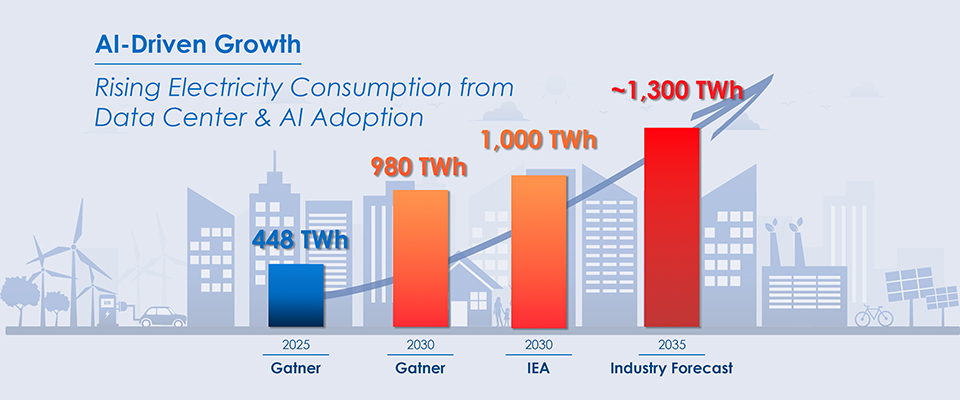
These forecasts present a major challenge for modern businesses: while AI fosters innovation, it also raises computing demands. As a result, companies are focusing more on using AI efficiently. This means using smart computing systems to increase productivity while reducing energy use. Many organizations are also using AI to improve efficiency and cut down on resource usage. For example, AI-driven energy management systems can help reduce energy use by up to 20% through smarter forecasting, automation, and optimization of infrastructure operations.
Source / Analyst
Year
Projected Global Electricity Use
Terawatt-hours (TWh)
Notes / Drivers
2030
> 1,000 TWh
Includes data centers, AI systems, and cryptocurrency; growth depends on AI adoption pace
2030
~980 TWh
Driven mainly by AI-optimized servers and high-performance computing workloads
One effective way to improve productivity is to use AI-capable devices. This allows tasks to be done on efficient local devices rather than relying completely on centralized systems. As organizations adopt these AI-enabled devices and upgrade their IT infrastructure, the focus is shifting to “efficient AI.” This means using smart systems that boost productivity while reducing environmental impact. By connecting smart computing, efficient hardware, and hybrid AI workflows, modern business PCs are becoming essential for sustainable IT strategies.
AI Enables More Efficient Computing
AI-enabled PCs help organizations work more efficiently by allowing them to process some tasks locally. Instead of sending every task to a central server, businesses can share workloads between their devices and cloud services based on what works best.
This model, supported by systems such as Windows 11 and tools such as Microsoft Copilot, helps employees complete tasks faster while making better use of resources.
AI also supports sustainability in important ways:
- Smarter workload allocation between local devices and cloud services
- Reduced data transfer, lowering network and processing demands
- Automation of repetitive tasks, minimizing unnecessary computing cycles
- Data-driven insights that help organizations monitor and optimize energy usage
Many organizations pair local computing with flexible cloud services like Microsoft Azure to handle advanced analytics and AI tasks. By balancing local and cloud processing, businesses can respond more quickly while using their infrastructure more efficiently.
Compact AI PCs Reduce Physical and Energy Footprint
Hardware design is important for sustainable IT. Compact computers can use fewer materials while still offering strong performance for business tasks.
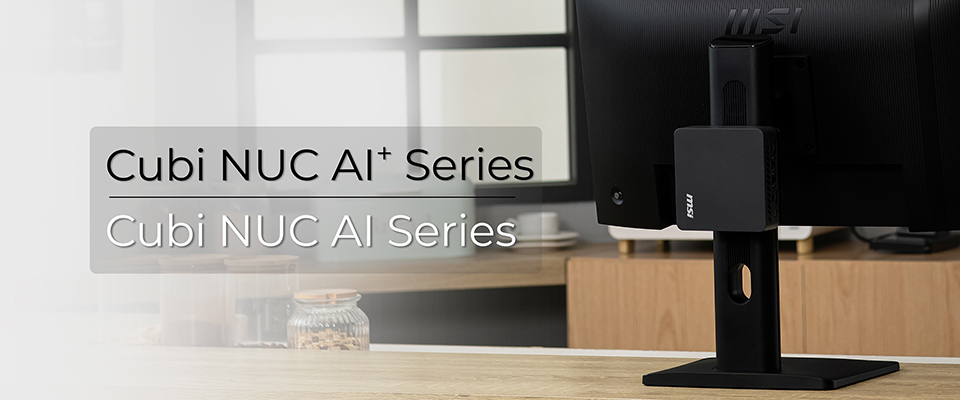
The MSI Cubi NUC AI series shows how mini PCs can give powerful computing in a small size. Its design saves space and needs fewer materials than traditional desktop towers. This makes it ideal for offices, service counters, and small spaces.
The MSI Cubi NUC AI+ series boosts AI workflows in a compact setup for businesses. These systems let organizations use a mix of local processing for some tasks and handle more intensive workloads through cloud services when needed.
This approach helps businesses stay productive while using computing resources more efficiently.
Efficient Desktops for Scalable Business Deployments
Many businesses still use traditional desktop computers for daily tasks and specific jobs, even though mini PCs are great for small spaces.
The MSI PRO DP10 and MSI PRO DP21 are designed to handle everyday office work efficiently while being compact. For companies that need more power, the MSI PRO DP80 and MSI PRO DP180 offer scalable options for handling analytics, content creation, and other data-intensive tasks.
By choosing the right performance level for each department, businesses can avoid buying too much unnecessary hardware. This approach also helps reduce energy use across large groups of devices.
Smarter Device Management Supports Sustainable IT
Sustainability is not just about saving energy; it also involves managing devices well throughout their lifetimes. Tools like Microsoft Intune help IT teams keep track of device performance, install updates, and ensure security on all devices.
Good lifecycle management helps organizations in these ways:
- Extend device lifecycles through proactive monitoring
- Reduce unnecessary hardware replacement
- Make remote updates and maintenance easier
- Improve operational efficiency across IT infrastructure
Building a Sustainable Digital Workplace
As companies start using AI in their daily work, the main challenge is not whether AI will impact business but how to use it responsibly and efficiently.
Efficient AI computing is key for sustainable IT strategies. By sharing workloads smartly between local devices and cloud services, companies can boost performance and lower energy use. Compact system designs also help support sustainability by using fewer materials and allowing flexible workspace setups.
Lifecycle management is also important. Modern tools help IT teams extend the life of devices, improve visibility, and reduce electronic waste in large deployments.
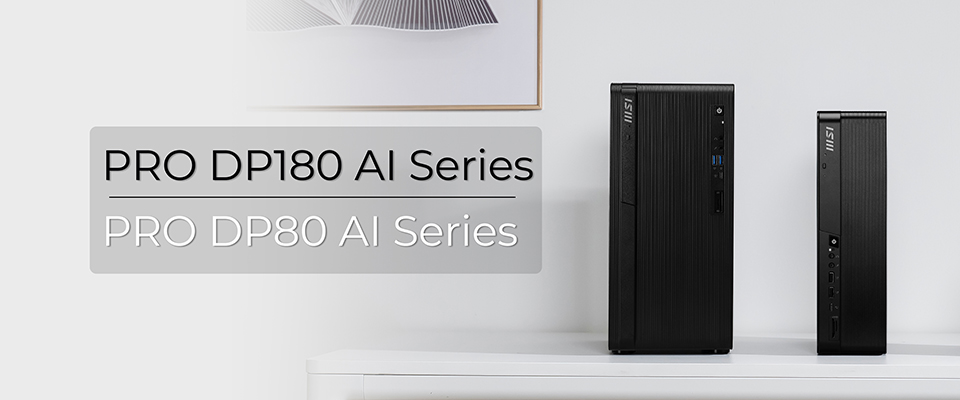
AI PCs, like the MSI Cubi NUC AI, Cubi NUC AI+ series, and MSI PRO desktop families, are a practical move towards a greener digital future. They combine smart processing with efficient hardware design, helping companies update their IT while meeting green goals.
As businesses enter the AI era, the most forward-thinking ones will focus not just on what AI can do but also on using it efficiently and responsibly. By balancing innovation with sustainability, companies can create digital systems that support long-term growth and a greener future.
Visit the following links for more information on MSI mini PCs or desktops:
- Cubi Series:
https://www.msi.com/Business-Productivity-PCs/Products#?tag=Cubi-Series - PRO Series:
https://www.msi.com/Business-Productivity-PCs/Products#?tag=PRO-Series - All-in-One PCs:
https://www.msi.com/All-in-One-PCs